
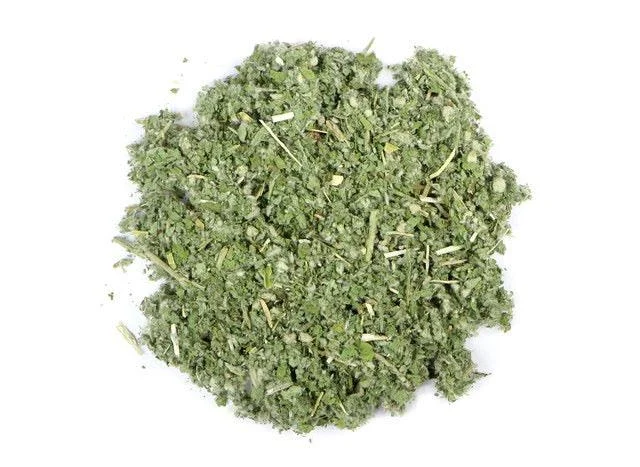
Description
Herbs are Sold By the Ounce, Price is Per Ounce
Horehound (Marrubium vulgare)
Family: Lamiaceae
Common Names: White Horehound, Common Horehound, Marrubium
Botanical : Horehound is a hardy perennial herb with a bushy appearance, growing about 1 to 2 feet tall. It has square, woolly stems covered with downy white hairs. The leaves are wrinkled, oval, and have serrated edges, giving them a somewhat crinkled appearance. The flowers are small, white, and form in dense clusters around the upper part of the stems. The plant has a strong, slightly bitter taste, and a characteristic aromatic scent.
Habitat and Cultivation: Horehound is native to Europe, North Africa, and parts of Asia but has naturalized in many parts of the world, including North America and Australia. It thrives in dry, sandy, or rocky soils and is commonly found in fields, along roadsides, and in waste areas. It prefers full sun and is drought-tolerant, making it an easy herb to cultivate in herb gardens.
Parts Used: Aerial parts (leaves and flowers)
Historical and Folklore Uses:
Horehound has been used since ancient times, with records of its medicinal use dating back to Ancient Egypt, Greece, and Rome. It was traditionally used as a remedy for respiratory ailments, particularly for coughs and colds. In medieval Europe, horehound was a common ingredient in cough syrups and lozenges. It was also believed to ward off witches and evil spirits, and was often planted around homes for protection.
Energetics and Taste:
- Energetics: Cooling, drying
- Taste: Bitter, aromatic
Medicinal Actions:
- Expectorant: Helps to loosen and expel mucus from the respiratory tract.
- Antitussive: Relieves coughs, particularly those associated with colds and bronchitis.
- Bitter Tonic: Stimulates digestion and increases appetite by promoting the secretion of digestive juices.
- Anti-inflammatory: Reduces inflammation, particularly in the respiratory and digestive systems.
- Antimicrobial: Fights bacterial and viral infections, especially in the respiratory tract.
- Cholagogue: Stimulates the flow of bile, supporting liver function and digestion.
System Affinities:
- Respiratory System: Horehound is best known for its ability to treat respiratory conditions such as coughs, colds, bronchitis, and asthma. It acts as an expectorant, helping to clear mucus from the lungs and ease breathing.
- Digestive System: The herb is also used as a bitter tonic to stimulate appetite, support digestion, and relieve bloating and indigestion.
- Immune System: Horehound’s antimicrobial properties make it effective in fighting off infections, particularly those of the respiratory tract.
Active Compounds:
- Marrubiin: A bitter compound responsible for horehound’s expectorant and antitussive properties.
- Flavonoids: Antioxidants that help reduce inflammation and protect against oxidative stress.
- Tannins: Astringent compounds that contribute to the herb’s antimicrobial and anti-inflammatory effects.
- Volatile Oils: These contribute to horehound’s aromatic properties and support its use in treating respiratory conditions.
Uses:
- Coughs and Colds: Horehound is commonly used in herbal teas, syrups, and lozenges to relieve coughs and other symptoms associated with colds, flu, and bronchitis. It helps to clear mucus and soothe the throat.
- Digestive Health: As a bitter tonic, horehound stimulates digestion, increases appetite, and relieves indigestion and bloating. It can be used before meals to promote digestive juices and improve overall digestion.
- Respiratory

Reviews
There are no reviews yet.